
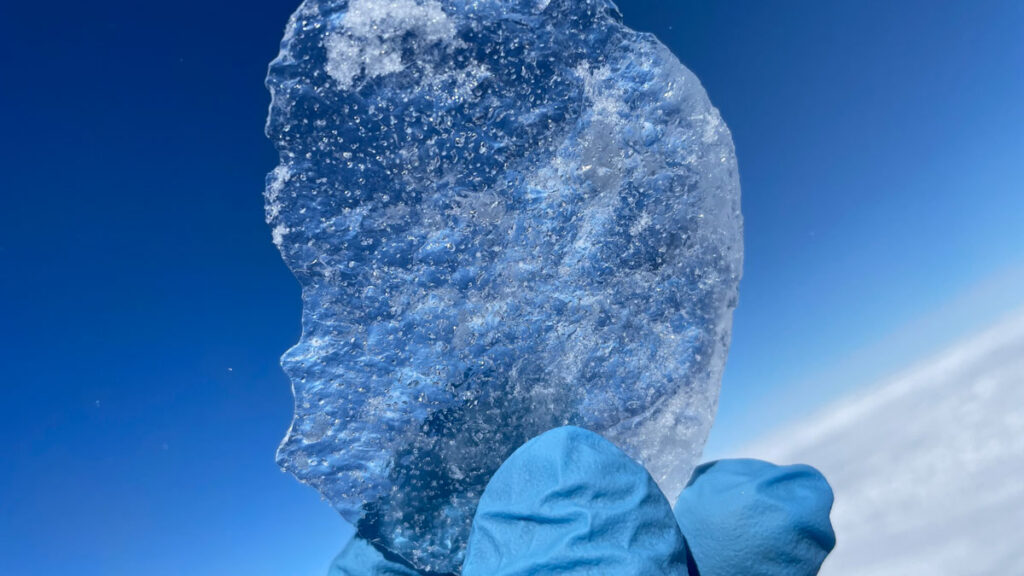
Joe McConnell has been studying ice cores from Greenland, northern Canada, and the Russian Arctic for decades. These cores contain stories about the history of Earth’s climate, including how humans have affected it.
McConnell and his colleagues have long been aware of a rise in levels of bismuth and antimony in these cores dating to the early 20th century. Both metals can be a by-product of anthropogenic activities such as mining, so researchers concluded their presence was likely the result of pollution from the Second Industrial Revolution. But pollution from industry continued—and indeed rose—long after the spike.
“Why did these things peak in the 1910s, 1920s?” wondered McConnell , a climate and environmental scientist at the Desert Research Institute specializing in ice cores. “It didn’t seem to fit.”
A few years ago, McConnell’s lab developed a method for measuring arsenic in ice cores. Arsenic is harder to measure than metals such as lead because it doesn’t have an isotopic signature and is found in such small amounts in ice cores. But like lead, bismuth, and antimony, arsenic can be a by-product of copper smelting.
In a new study published today in Nature Sustainability , the researchers used the arsenic information to trace the source of metals in 10 Arctic ice cores back to one dominant origin: the Anaconda Copper Mine in Montana, thousands of kilometers away.


